

Sustainable Rattan Furniture: Australia Guide 2026
, by Editorial Team, 15 min reading time
, by Editorial Team, 15 min reading time
Sustainable rattan furniture: Australia guide covering sourcing, climate suitability, care and buying tips for eco-conscious homes in 2026.
Last Updated: October 14, 2026
Sustainable rattan furniture is furniture made from a fast-growing climbing palm harvested from established plantations, where new growth replaces cut stems within a few years. According to Food and Agriculture Organization forestry guidance, rattan is one of the most rapidly regenerating commercial forest materials in Southeast Asia. At Lotus Handcrafts, we source handwoven pieces from Vietnamese artisan workshops for exactly this reason: the material regrows quickly.
The sustainability case rests on two pillars: how the plant grows, and how it is harvested.
Rattan grows as a vine, climbing through host trees rather than standing as a trunk. A single stem can be cut without killing the plant, and new stems emerge from the same root system. Plantation-grown rattan is typically ready to harvest within five to seven years, which is fast for a material durable enough to carry a full dinner service.
The distinction that matters for buyers is plantation versus wild harvest. Plantation sourcing keeps supply predictable and reduces pressure on natural forest, because growers have a commercial reason to replant.
Wild rattan harvesting can damage forest when cutters fell host trees to reach the vines. Well-managed plantations avoid this entirely, and they often sit on land that has already been cleared for agriculture rather than freshly logged forest.
Certification is how you tell the difference. The Forest Stewardship Council certification standards cover plantation management, worker conditions and chain-of-custody tracking. Ask any retailer whether their rattan is FSC-certified or traceable to a named growing region. If they cannot answer, that silence is your answer.
Rattan is the plant; wicker is the weaving technique; cane is rattan with its bark removed; bamboo is an unrelated grass. Confusing these four is the most common mistake we see, and it leads buyers to pay rattan prices for something else entirely.
Here is how they actually differ:
Material |
What It Is |
Best For |
Weather Notes |
|---|---|---|---|
Natural rattan |
Climbing palm, solid core |
Indoor furniture, trays, frames |
Needs cover; dislikes prolonged rain |
Synthetic rattan |
Plastic resin woven to imitate rattan |
Exposed outdoor settings |
UV-stabilised versions last longer |
Cane |
Rattan with bark stripped |
Seating, webbing, light frames |
Similar to rattan; less moisture-tolerant |
Bamboo |
Grass with hollow stems |
Trays, decor, flooring |
Very hard; splits if left wet |
Wicker |
Any woven technique |
Describes method, not material |
Durability depends on the underlying fibre |
Verification comes down to three questions: where did the rattan grow, who wove it, and what documentation backs that up. A retailer selling genuinely sustainable rattan furniture should answer all three without hesitation. But to move beyond broad claims, you need to know which certifications and documentation actually matter.
The most credible certification for rattan is Forest Stewardship Council (FSC) chain-of-custody, which tracks material from the plantation through every stage of processing and manufacturing. An FSC claim on a finished piece means the fibre can be traced back to a certified forest or plantation. Other schemes you may encounter include the Programme for the Endorsement of Forest Certification (PEFC), which recognises national certification systems, and the Roundtable on Sustainable Palm Oil (RSPO), though RSPO applies to palm oil, not rattan, so treat any rattan product claiming RSPO as a red flag.
Beyond certification logos, ask for these specific documents:
Watch for these warning signs:
We name Vietnam openly because our pieces are made there by artisan partners using traditional weaving methods, and we would rather you know that than guess. For our own trays, we can trace the rattan to specific plantations in Vietnam and identify the workshop that wove each piece.
Outdoor rattan furniture suits covered verandahs and alfresco areas, but natural rattan needs protection from direct sun and driving rain.
Tropical north (Queensland, Northern Territory, northern Western Australia): High humidity, intense UV, and a distinct wet season make this the harshest environment for natural rattan.
Subtropical and coastal (New South Wales coast, southern Queensland): Salt air and humidity are manageable if air circulates, but standing damp is not.
Temperate south (Victoria, Tasmania, southern South Australia): Lower humidity and less intense UV make this the most forgiving region for natural rattan outdoors, provided it is under cover.
Arid and semi-arid (inland areas, South Australia, Western Australia): Very low humidity and intense sun.
Handwoven Rattan Tray – Grey & White Leaves →
Coastal salt air: In all coastal areas, salt residue builds up on frames and weaves.
A simple rule: if your outdoor area is fully exposed to rain and direct sun, choose synthetic rattan or accept that natural rattan will need replacing sooner. If you have a covered, ventilated space, natural rattan can last many years with basic care.
Rattan care is simple: dust regularly with a soft dry cloth, keep it out of prolonged moisture and direct sun, and address spills immediately. Our own care guidance for every tray we sell is exactly that, and it applies to rattan furniture generally.
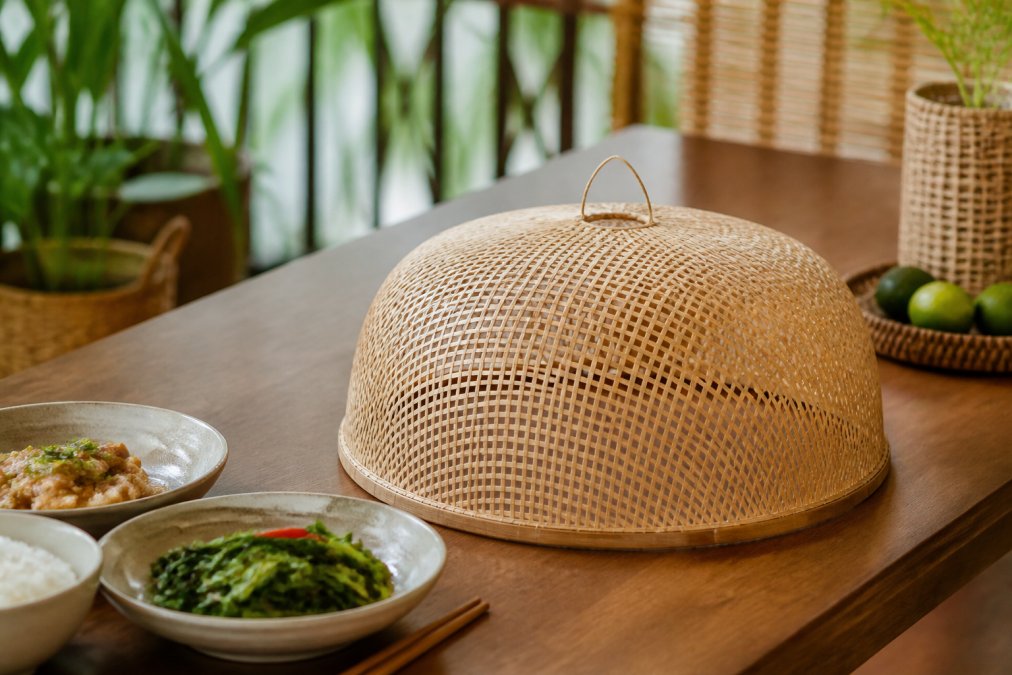
For deeper cleaning, use a barely damp cloth and dry the piece straight away. Never soak rattan or hose it down. If a weave feels dry over time, a light application of furniture oil can restore suppleness, though it is rarely necessary indoors.
A practical maintenance rhythm:
A well-made rattan piece typically lasts many years indoors, and often longer with basic care. That lifespan is the core of the total cost argument: a handwoven tray at $27 costs less per year than three cheaper trays that crack and get replaced.
Total cost of ownership includes:
At end of life, natural rattan can be composted or broken down rather than sitting in landfill. That is a genuine advantage over synthetic alternatives, and it is worth weighing when comparing prices.

Use this checklist before you buy. It separates verifiable sustainability from marketing language in about five minutes.
For readers building a natural-material look, our Handwoven Rattan Serving Tray Set shows what tightly woven, hand-finished rattan looks like in practice, and the Handwoven Rattan Tray in Grey & White Leaves suits a more modern, minimalist interior without looking rustic.

Rattan is a climbing palm with solid, flexible stems that can be bent into curved shapes and woven into intricate patterns, making it ideal for detailed furniture frames and decorative pieces. Bamboo is a fast-growing grass with hollow, rigid poles that are stronger in straight lines and better suited to structural or flat surfaces. Both are renewable, but rattan offers more design versatility for woven furniture, while bamboo tends to be more rigid and linear in form. Each material suits different styles and functions.
Look for transparency about where the rattan was grown and harvested. Sustainable rattan typically comes from plantation-grown or responsibly managed forests, and some suppliers hold certification from bodies like the Forest Stewardship Council (FSC). Ask the retailer whether they can trace the material back to a specific region or supplier. Handwoven pieces from small workshops often come with more detailed provenance than mass-produced imports. If a retailer cannot answer basic sourcing questions, that is a warning sign.
Natural rattan is best kept under cover, such as a verandah or alfresco area, because prolonged sun and rain will degrade the fibres over time. Synthetic rattan, often made from UV-stabilised polyethylene, handles sun and moisture better and is a common choice for exposed outdoor settings. For natural rattan outdoors, bring pieces inside during heavy rain and store them in a dry spot. In coastal areas, salt air adds another layer of wear, so regular cleaning helps extend the life of any rattan furniture.
Dust rattan regularly with a soft, dry cloth or a vacuum brush attachment to stop dirt settling into the weave. For deeper cleaning, wipe with a barely damp cloth and dry immediately. Avoid soaking the material or using harsh chemicals, as moisture can cause mould and weaken the fibres. Keep pieces out of prolonged direct sunlight to prevent drying and cracking. For outdoor rattan, bring it under cover during wet weather. With this care, rattan furniture can last for many years.
Natural rattan garden furniture that is kept under cover and maintained well can last many years. Synthetic rattan, which resists UV and moisture damage, often lasts longer in similar conditions. Lifespan depends heavily on exposure: pieces left in full sun and rain will deteriorate faster. Regular cleaning, avoiding prolonged moisture, and storing furniture during harsh weather all extend the life of rattan pieces. Quality of craftsmanship also plays a role in durability.
Sustainable furniture is available from specialist retailers, artisan marketplaces, and some larger homeware stores that stock eco-certified ranges. Look for retailers that clearly state their materials, sourcing practices, and any certifications. Australian-owned businesses that work directly with artisan workshops often provide more detail about how pieces are made. Online stores with fast delivery options make it easier to buy sustainable pieces without waiting weeks. Always check the returns policy and care instructions before purchasing.
Choosing sustainable rattan furniture means asking questions many retailers would rather avoid: where it grew, who wove it, and how it will age in your home. Lotus Handcrafts exists to make those answers easy, with handcrafted pieces made from natural and sustainable materials, artisan techniques passed down through generations, and next day delivery so a meaningful gift arrives on time. Browse our collections and bring a piece of considered craftsmanship into your space.