
Modern Minimalist Decor with Natural Materials: A Guide
, by Editorial Team, 16 min reading time
, by Editorial Team, 16 min reading time
Learn how to use natural materials in minimalist decor. Explore rattan decor ideas, bamboo home decor, and styling tips for a warm, uncluttered space.
Last Updated: October 21, 2026
Modern minimalist decor with natural materials works because it pairs clean lines with warm, tactile surfaces. Wood, stone, rattan and linen soften a stripped-back room without adding clutter.
The old idea of minimalism was stark white and hard edges. It looked beautiful in photos and felt empty in real life. Natural materials fix that problem.
Organic modern design is a style that blends minimalist forms with natural finishes, earthy tones and tactile surfaces.
This look is not rustic. It is not dated. A well-chosen rattan piece sits comfortably beside a sleek sofa and a plain stone table.
Here is what defines the style:
The Australian Government's guidance on sustainable consumption is a useful starting point if you want to check how materials are sourced and recycled.
Start with a base of warm neutrals, then layer earthy tones and natural textures on top. A neutral, earthy palette is the backbone of any minimalist room.
Pick three base colours and stick to them. For example:
Then add natural materials in their own colours. Wood brings honey and walnut tones. Stone brings grey and charcoal. Linen brings cream and stonewash. These shades sit together without clashing.
A common mistake is adding too many accent colours. Keep to your three base tones and let texture do the work.
Rattan is the easiest way to add warmth to a minimalist room. The trick is to use a few well-chosen pieces, not a full set.
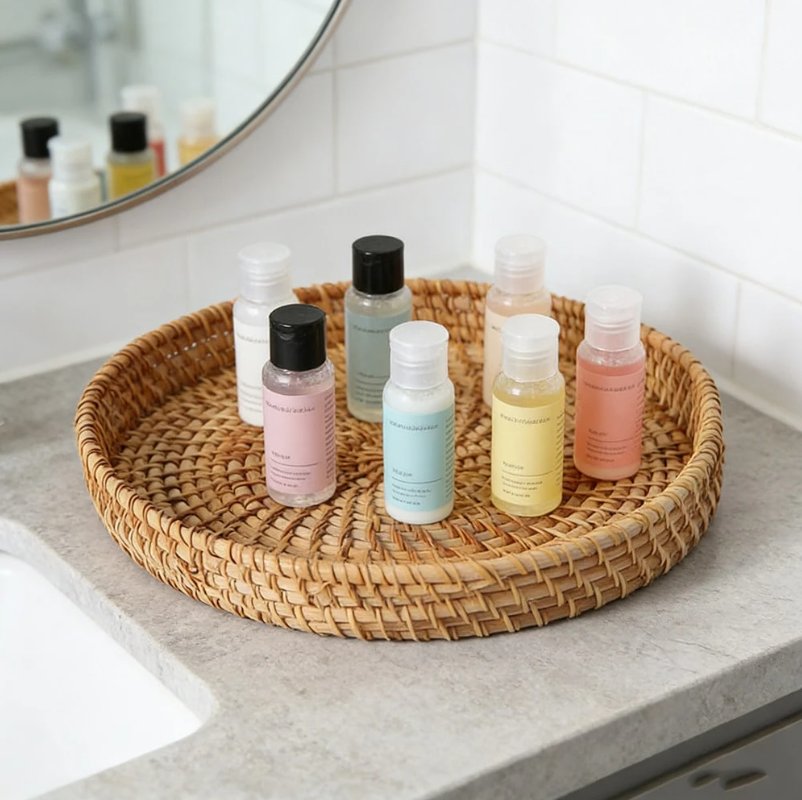
Good rattan decor ideas for a modern home:
Our Handwoven Rattan Serving Tray Set ($31.50) is a simple starting point. It is hand-finished by artisans in Vietnam and works for serving or styling.

Bamboo home decor suits minimalism because it is straight, light and simple. It brings warmth without bulk.
Bamboo is a grass, not a timber, so it grows back quickly. That makes it a practical sustainable material for everyday pieces.
Ways to use bamboo:
Our Large Bamboo Rectangular Serving Tray, 50 × 30 cm ($35.95) has cutout handles and raised edges.

Style natural materials by mixing different textures, not by matching them. Contrast is what makes a minimalist room feel rich.
Aim for contrast in every grouping. Pair a smooth stone bowl with a coarse woven basket. Pair crisp linen with soft wool.
Use this simple rule:
Our Echo Coasters - Set of 4 ($19.95) add a small natural accent to a coffee or dining table.
Greenery finishes the look. One large plant beats five small ones. A single olive tree, fiddle-leaf fig or trailing pothos adds life without clutter.
Natural materials work in every room, not just the living room. The key is to scale the approach to the space and your budget, and to choose pieces that can move with you if you rent. Below is a room-by-room guide with specific pieces, budget tiers, and renter-friendly tactics.
Goal: calm and warm without clutter. Start with linen bedding in oat or stonewash, it softens the room instantly and needs no styling. Add one woven basket for laundry or throws, and a small wood accent on the bedside table. For renters, use a freestanding bedside shelf or a wall-mounted shelf with removable adhesive strips.
Handwoven Rattan Serving Tray Set →
Goal: bring warmth to a hard-surfaced room. Wood and stone work well here if you keep them dry. Use a bamboo soap dish, a stone tray for bottles, and a small mango wood tissue holder on the vanity. Avoid porous wood near the shower, moisture will warp it over time.

Goal: functional warmth on the bench. A large bamboo tray corrals oils, salt and pepper, and a linen tea towel adds softness. A woven bowl for fruit is practical and decorative. Keep wood away from the sink to prevent water marks.
Goal: a landing spot that stays tidy. A woven basket for keys and mail, a small stone dish for loose change, and a bamboo or wood hook rack (renter-friendly versions use adhesive strips). Keep the palette to two tones so the small space feels calm.
| Room | Natural Piece | Budget | Renter-Friendly |
|---|---|---|---|
| Living room | Rattan tray set | $31.50 | Yes |
| Kitchen | Bamboo serving tray | $35.95 | Yes |
| Bathroom | Mango wood tissue holder | $19.95 | Yes |
| Dining table | Echo coasters | $19.95 | Yes |
| Bedroom | Woven storage basket | Varies | Yes |
| Hallway | Woven key basket | Varies | Yes |
Natural materials last for years if you care for them well, but each material has its own weaknesses. Below is a material-by-material guide to durability, maintenance, and what to check before you buy.
Durability: Solid wood is hard-wearing and develops a patina over time. Mango and acacia are common in decor pieces; teak is more weather-resistant.
Weaknesses: Moisture causes warping and staining; direct sun fades the grain; harsh cleaners strip finishes.
Care: Wipe with a soft, dry cloth after use. For food-contact pieces, use a food-safe oil every few months.
Durability: Very long-lasting, but porous stones can stain.
Weaknesses: Acidic foods and cleaners etch marble; oil and wine can stain if unsealed.
Care: Wipe spills immediately. Use a pH-neutral cleaner. Seal porous stone annually if it is used in a kitchen or bathroom. Avoid abrasive pads.
Durability: Bamboo is a grass that grows back quickly, making it a practical sustainable choice. It is lightweight and takes a clean finish well.
Weaknesses: Can crack if soaked; may warp near heat sources.
Care: Hand-wash and dry immediately. Avoid soaking. Oil occasionally with a food-safe oil to prevent drying and cracking.
Durability: Tightly woven fibres hold up well; hand-finished pieces last longer than mass-produced ones.
Weaknesses: Moisture causes mould and warping; direct sun dries and cracks fibres.
Care: Dust regularly with a soft brush or vacuum attachment. Keep dry. Rotate pieces every few months to spread sun exposure. Store in a cool, dry place.
Durability: Linen softens with washing; wool is resilient but can pill.
Weaknesses: Hot water shrinks linen; moths attack wool; direct sun fades colours.
Care: Wash linen in cool water and air-dry. Air wool rather than washing frequently; store with cedar blocks to deter moths. Rotate cushions to spread wear.
When buying natural materials, look for:
The Australian Competition and Consumer Commission's guidance on environmental and sustainability claims explains what businesses can and cannot claim, which helps you spot greenwashing. For broader guidance on sustainable consumption, the Australian Government's sustainability guidance is a useful starting point.
Warmth in a minimalist room comes from texture and tone rather than clutter. Choose natural materials with visible grain, such as wood, rattan and bamboo, and pair them with warm neutrals like oatmeal, sand and clay. Layer tactile finishes such as linen, wool and woven seagrass, then add one or two live plants for softness. A handwoven rattan tray or a bamboo serving tray styled with a candle and a small plant adds warmth without breaking the clean, uncluttered look.
Rattan works best in a modern living room when it is treated as an accent rather than the main event. Keep furniture lines simple and introduce rattan through smaller pieces such as trays, baskets or coasters. A set of tightly woven natural rattan trays can hold remotes, books or a teapot while adding organic texture against sleek furnishings. Choose pieces with hand-smoothed finishes and pair them with neutral textiles so the rattan reads as considered rather than rustic.
Keep bamboo, rattan and seagrass away from prolonged moisture and direct sunlight, which can cause warping, fading or mildew. Dust regularly with a soft, dry cloth and wipe gently with a barely damp cloth when needed, then dry thoroughly straight away. Store pieces in a cool, dry place during humid spells. Avoid soaking and abrasive cleaners. With this simple routine, natural pieces develop a richer patina over time rather than deteriorating.
Not when the shapes are simple and the palette is controlled. Modern minimalist decor relies on clean lines and simple forms, and natural materials fit that brief when you choose pieces with restrained geometry, such as a rectangular bamboo tray or a compact mango wood tissue holder. Avoid heavily carved or ornate designs. Pair natural textures with matte finishes and neutral colours, and limit yourself to a few pieces per room so each one reads as intentional.